






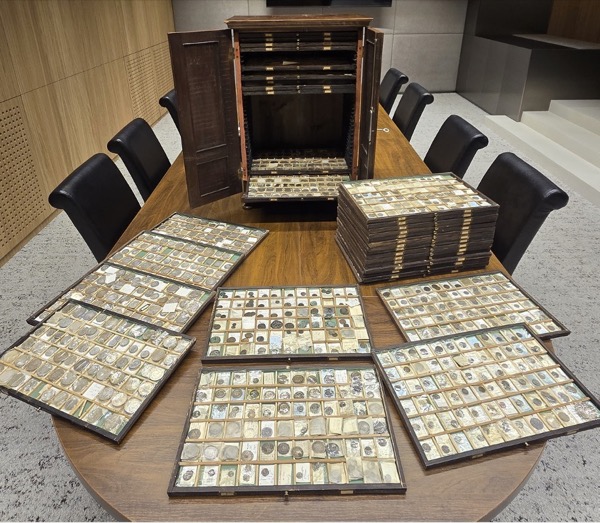
There are collections formed out of whim, and there are collections born of character. The collection of František Trefanec (1904–1983) belongs unequivocally to the latter. A man whose profession throughout his life was auditing others’ balance sheets applied the exact same degree of focus, order, and consistency to the world of coins.
From a Bohemian Forest Cottage to Banking Offices
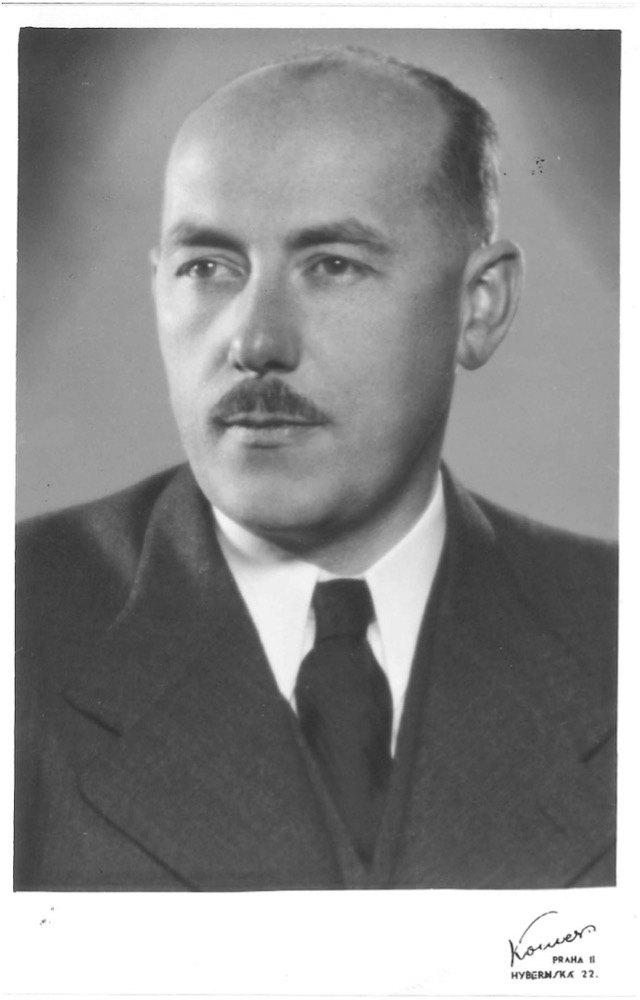
František Trefanec was born into a smallholder family in a tiny village in the Bohemian Forest (Šumava) region as one of twelve children. He walked two hours on foot to primary school every day—yet, thanks in part to the support of his grandparents, he graduated with honors from the Commercial Academy in Pilsen. He joined the Czech Commercial Bank (Česká komerční banka), and his career gradually led him through Pilsen and Brno to Prague, where he worked his way up at the Prague Credit Bank (Pražská úvěrní banka) to become the head of the industrial audit department and an authorized signatory.
During the Occupation, he worked at the Czech Union Bank (Česká banka Union). Following its nationalization and liquidation, he was transferred to Živnostenská banka in October 1945. Owing to his high professional qualifications as an audit and accounting official, he began working in 1950 for the newly established State Bank of Czechoslovakia (Státní banka československá). He served at the State Bank for many years, despite being subjected to enormous pressure and relentless political background checks.
František placed great emphasis on education and broad horizons—he spoke German and English fluently and guided his son down the same path of education and languages. During the Economic Crisis of the 1930s, his salary was used to pay off the mortgages on the family estate to save it from auction, while he simultaneously supported his studying siblings.
Fraternal Bonds
Throughout his life, František maintained his closest relationship with his brother Jan, whom he had once helped gain an education. Jan studied law in Prague and became an attorney. Unfortunately, due to defending clients in politically sensitive trials during the 1950s, he was forced to end his legal practice. Later, he worked as a corporate lawyer. A bohemian by nature, Jan also collected coins; toward the end of his life, he passed his modest collection to his brother, who integrated it into his own. In this respect, it is a fascinating collection shaped by the passion of two brothers, though systematically organized by František.
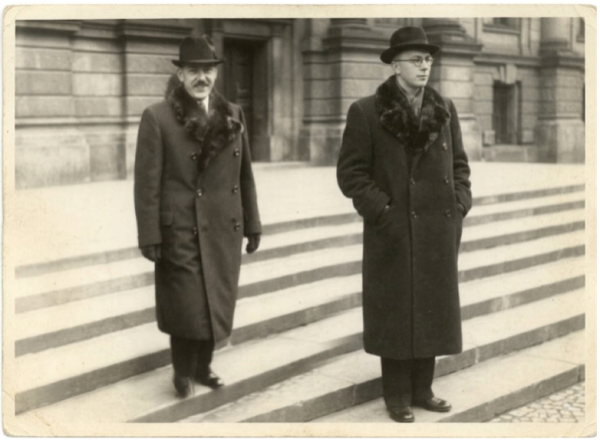
A Banker Body and Soul
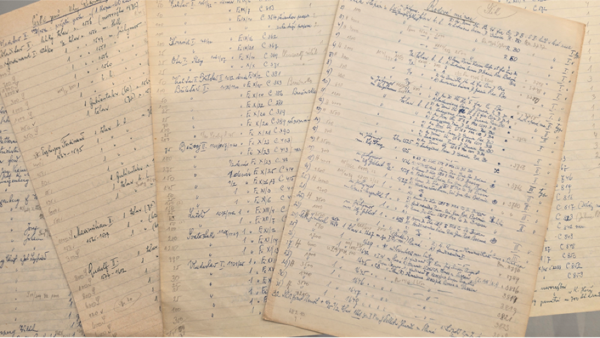
František was a bank official body and soul—the discipline required by his profession permeated his private life as well. With notorious meticulousness, he kept records of even the smallest household expenses, as if every single crown entry were subject to the same audit he performed on large industrial enterprises. The same precision accompanied his coin collection—every piece that passed through his hands was examined with the same attention he devoted to financial balances. He kept painstaking records of the coins he acquired.
A Quiet Passion in Unfree Times
František never spoke publicly about his collection—after all, the family had more than sufficient reason to remain cautious toward the regime. Contemporary documents from his estate, including political evaluation reports from the early 1950s, attest to an era when it was necessary to give a detailed accounting of oneself—of one’s own past as well as the financial circumstances of the entire family. Given where he worked, collecting coins posed a significant risk for him.
At the same time, his professional background provided a highly qualified foundation for numismatics. He was knowledgeable in metallurgy, monetary history, and counterfeits. Coin collecting thus remained his private, secret world for decades—an island of freedom beyond the reach of political pressure. Numismatics was the pinnacle of his collecting passion. Simultaneously, he collected anything that possessed a system and a story: stamps, postcards, badges, matchboxes, razor blade wrappers, and chocolate wrappers. With the same enthusiasm, he devoted himself to photography and hiking, encouraging both his wife and son to join him, and spent many evenings with friends, pipe in hand, playing mariáš—a traditional Czech and Slovak trick-taking card game.
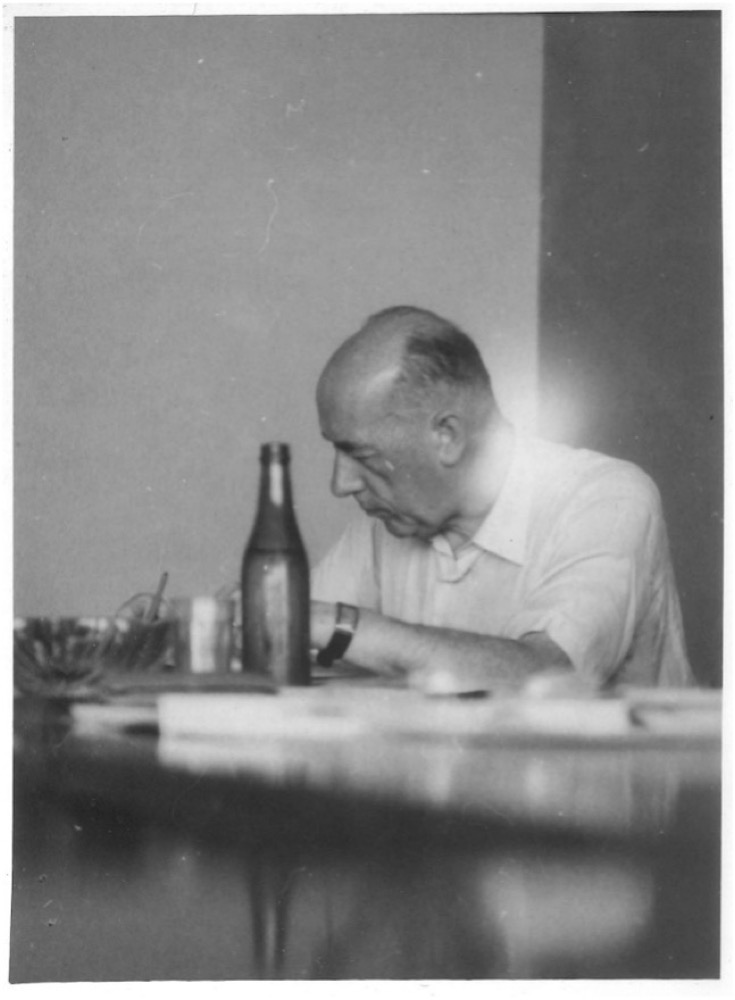
Secret photograph of numismatic activities, 1960
A Collection Without a Successor
His son was a physician body and soul. He dedicated his entire life to medicine and helping the sick, leaving no room to continue his father’s passion. Numismatics never captivated him as it had his father; thus, after František’s death, the entire collection remained locked in a cabinet exactly as his father had left it. The expansion of the collection effectively ended with František’s passing.
From the Celts to Rare Polish Gold Coins
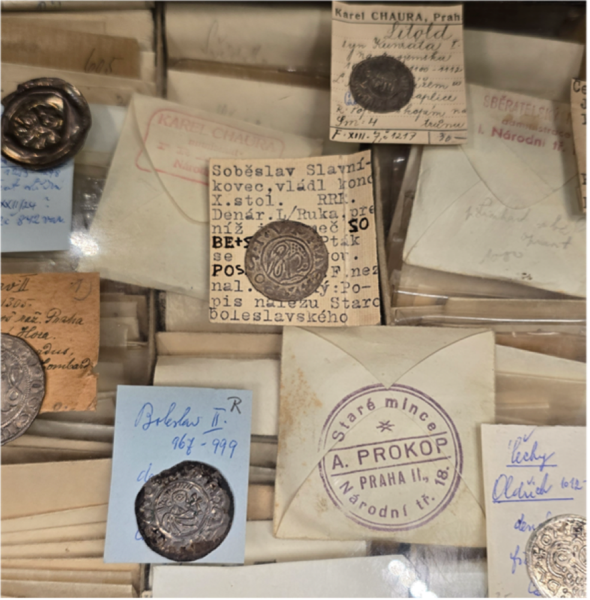
The Trefanec Collection offers a fine cross-section of numismatic monuments from the Bohemian lands. Beginning with Celtic coinage, extending through heavily represented denarii, and continuing to bracteates, enthusiasts of the groschen period will find much to admire, with an opportunity to expand their collections with beautiful coinages of Bohemian monarchs—lacking only the absolute rarest issues.
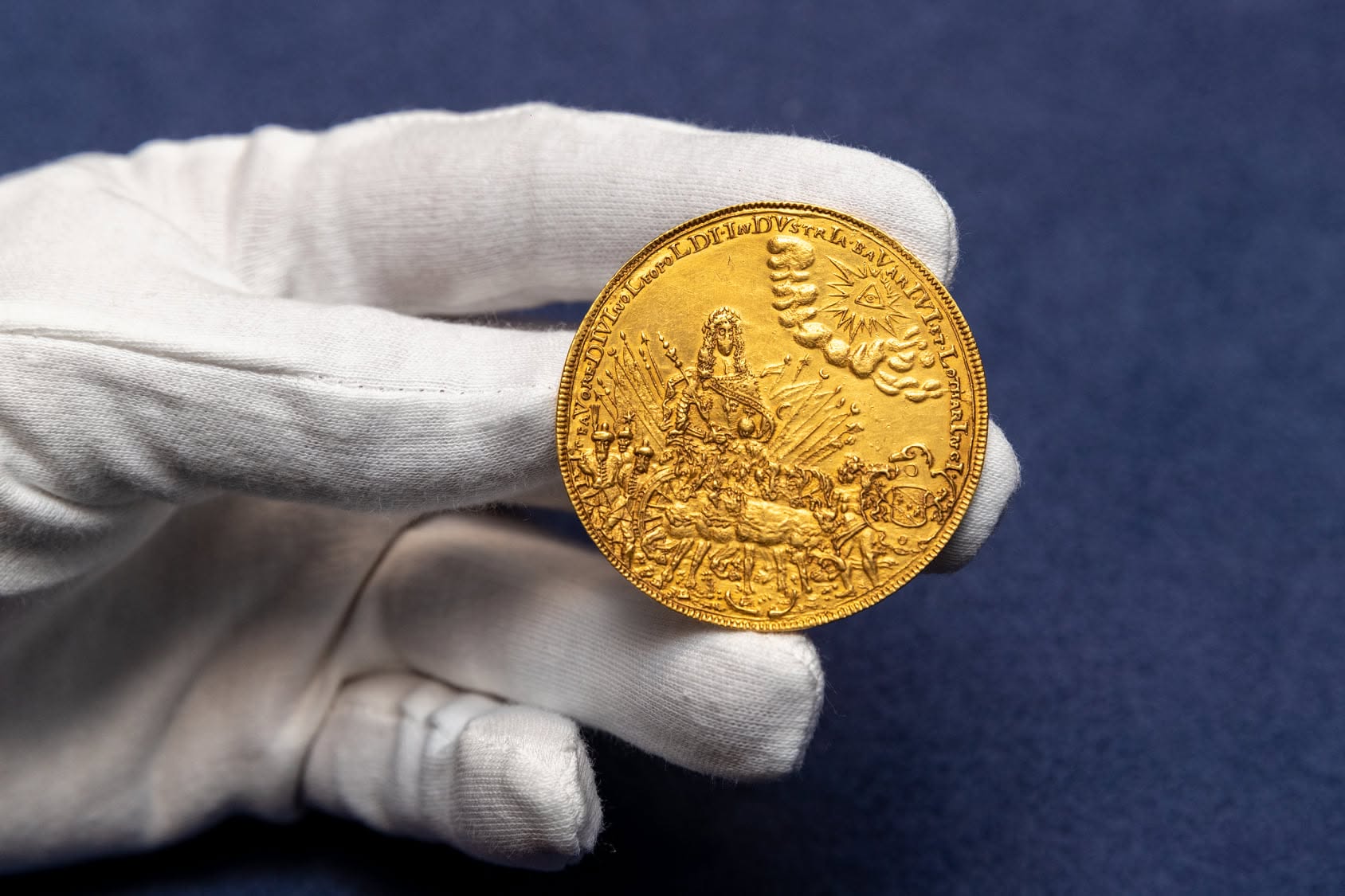
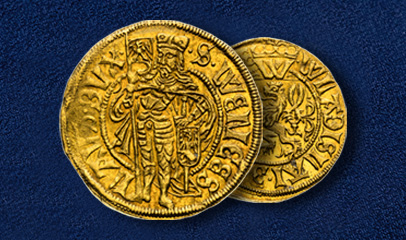
Habsburg coinage presents collectors with a broad selection ranging from small change to thaler and ducat issues from Bohemian mints. A notable highlight is a gold ducat of Frederick of the Palatinate (“The Winter King”). The auction offering also features higher ducat denominations in the form of two ten-ducat pieces of Ferdinand II and Ferdinand III. The Habsburg section concludes with a collection of Francis Joseph I issues, featuring exceptionally preserved commemorative pieces such as the Southern Railway (Südbahn) thaler, the Kutná Hora double thaler, the Příbram Mining florin, and Goetz pattern crowns of 1914 in bronze and silver.
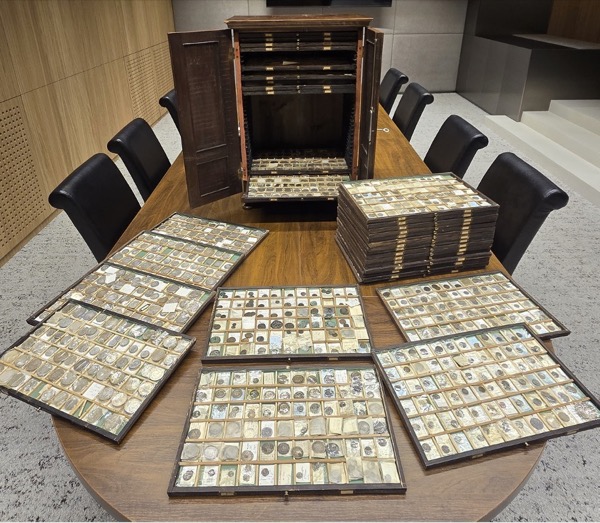
František Trefanec also managed to assemble a splendid collection of gold and silver regional and noble family coinages, featuring the Eggenberg, Schlik, Rosenberg, Liegnitz-Brieg, and Albrecht von Wallenstein families.
The immense scope of the Trefanec Collection is further demonstrated by an offering of German coins ranging from the 16th century to the Weimar Republic, where most coins were collected systematically by date and mint mark. Coinage of Imperial Russia in exceptional states of preservation also forms a highlight of the collection.
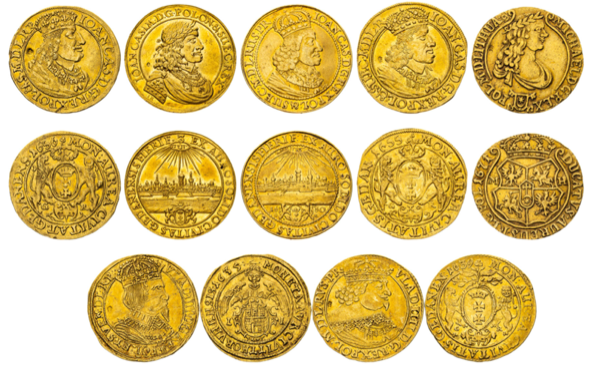
The crowning touch of the entire auction will undoubtedly be the collection of Polish gold coins. These are highly rare issues from the 16th and 17th centuries. A total of 7 coins from this collection originate from the famous numismatic collection of Count Andrzej Potocki (Andrzej Kazimierz Potocki, 1861–1908), a prominent Polish nobleman, politician, and world-class collector. Potocki countermarked his coins in the field with his own collector’s mark featuring his family crest.
Discover the TREFANEC COLLECTION in our Autumn Auctions. View Current Auctions →

