

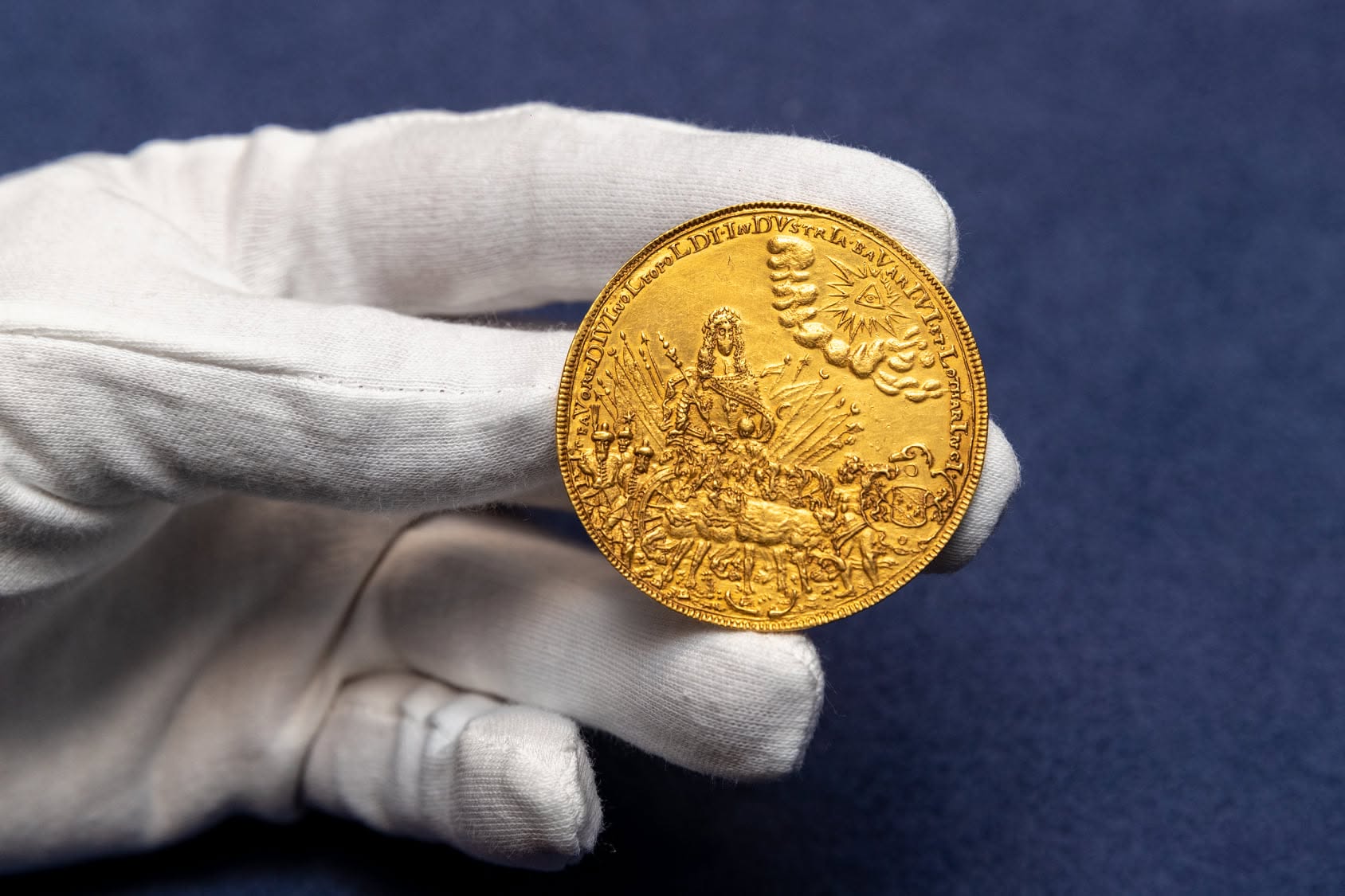





A rare coin can be bought. A great collection, however, cannot be bought. It comes into being over decades—through a combination of knowledge, patience, memory, a collector’s instinct, and thousands of hours of work hidden behind every correct decision. It demands the ability to recognize an exceptional piece before others do, sometimes waiting years for it, and the equal discipline to reject a coin that does not belong in the intended whole.
One of the Most Significant Private Collections
Jaroslav Kokolus has created one of the most significant private collections of Central European coinage ever formed. In certain areas, his collection has no true equal in private hands. Its uniqueness lies not merely in the sheer quantity of rare issues, nor in the resources required to acquire them. What is truly extraordinary is the combination of breadth and precision.
Highly specialized collections can achieve remarkable depth; extensive collections, on the other hand, frequently lose consistency in quality. Jaroslav Kokolus managed to unite both—the breadth of an almost institutional collection with the rigorous precision of a specialist who knows not only the type, date, and variant, but also the specific specimen, its provenance, and its precise place within the whole.
Over my years working in numismatics, I have had the privilege of knowing many major collections and holding coins in my hands that appear on the market once in a generation. Only once, however, have I encountered an ensemble capable of surprising time and time again, tray after tray. Therein lies the greatness of the Kokolus Collection. It is not built upon a few dazzling highlights surrounded by mediocrity; it is the result of a relentless demand for quality, rarity, provenance, and the intrinsic interconnection of each individual piece.

Provenance and the History of Individual Specimens
Equally remarkable as the coins themselves is the scholarship accompanying them. For decades—aided by his background in IT and cybernetics—Jaroslav Kokolus built a proprietary database tracking appearances, provenances, and the market history of individual specimens.
He was able to trace their paths through major collections and auctions going back nearly 150 years. He thus viewed a coin not merely as a catalog entry or type, but as a unique historical artifact with its own destiny. This ability to synthesize detail with the overall narrative is the hallmark of a truly great collector.
From Sovereign Eras to Kremnitz Coinage
Following the initial Czechoslovak volume, we opened subsequent portions of the collection largely structured by sovereign epochs, venturing deeper into the past. With Joseph I, however, this progression came to a pause. Older hand-hammered Bohemian coinage—and above all, the large gold denominations—represents the heart of the Kokolus Collection. This was the core he was unwilling to relinquish.
In one of our long conversations, I later persuaded him to release at least the beginning of the Habsburg era for the sixth volume: Ferdinand I and Maximilian II. The fact that these series did not intrude upon his primary line of large gold coins made the decision acceptable to him.
This seventh volume shifts the perspective once more. The Bohemian core of the collection remains untouched; this time, the Kremnitz issues of individual monarchs are united into a standalone, comprehensive volume. From the outset, their backbone consisted of single ducats and thalers, naturally supplemented by select thaler multiples.
Extraordinary Completeness of the Ducat and Thaler Series
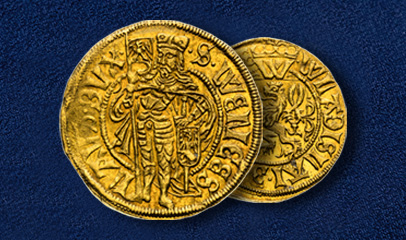
This extraordinary thoroughness is best illustrated by the numbers alone: out of 133 documented ducat dates, Jaroslav Kokolus acquired 131; out of 102 thaler dates, he secured 99.
Thus, only two dates are missing from the ducat series—the 1578 of Rudolf II and the 1620 of Ferdinand II; and only three from the thaler series—the 1578 of Rudolf II, the 1620 of Gabriel Bethlen, and the 1658 of Leopold I. None of these missing coins, however, has yet appeared on the numismatic market.
It is also worth noting that the collection contains many coins that are not represented in the Wiener Münzkabinett, as well as numerous hitherto unpublished die and legend variants. Such completeness is not achieved by chance or sheer purchasing power alone. It is the fruit of long-term market focus, patience, and the ability to recognize an opportunity that may present itself only once in many years.
Half-Thalers, Quarter-Thalers and Thick-Flan Strikes
Jaroslav Kokolus never systematically collected half-thalers or quarter-thalers. He began acquiring them only when there was virtually nothing left to add to the main series—and when he began, to put it with mild exaggeration, to feel a bit bored. Consequently, these secondary denominations are not represented with the same exhaustive completeness.
In silver, however, he was drawn to another highly distinctive field: thick-flan strikes. From both Bohemian and Kremnitz production, he managed to acquire virtually all those that have appeared on the market in recent decades.
Large Kremnitz gold denominations were not an independent, systematic goal; a few individual double ducats serve rather as occasional extensions. This renders Kokolus’s collecting signature all the more distinct: extraordinarily dense date runs, an eye for rare variants, an emphasis on the finest available quality, and the ability to connect every piece with its market and collection history.
Jaroslav Kokolus Did Not Merely Build a Collection. He Set a Benchmark.
This catalog is therefore neither a remnant of the six preceding auctions nor a random selection of coins from a single mint. It is a standalone, intrinsically reasoned whole, and simultaneously a testament to what one individual can accomplish when collecting becomes a true lifelong passion.
With this auction, the shared journey of these coins comes to a close; each will set out toward a new owner and begin writing the next chapter of its story. The catalog, however, should preserve what is most essential: the knowledge that they once formed a unified whole, brought together through the vision, perseverance, and extraordinary instinct of one of the most prominent collectors of his generation.
Jaroslav Kokolus did not merely build a collection. He set a benchmark.
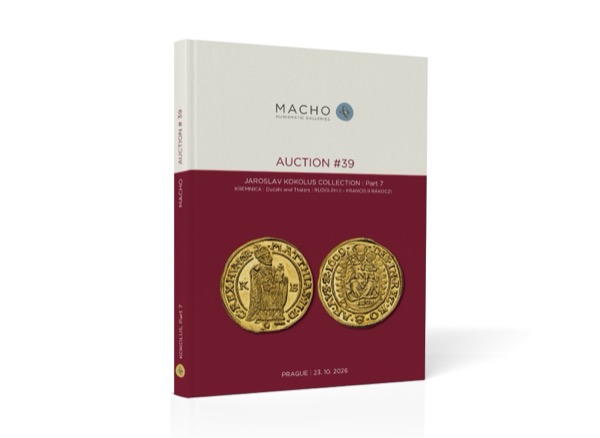
Coins from Part 7 of the Jaroslav Kokolus Collection will be offered in Auction #39 on 23 October 2026. Explore the complete auction offering.


